


Numbness in the fingers is common, troubling, and sometimes alarming. It may indicate a significant problem in the peripheral nervous system. The sensation is often accompanied by a dull ache, weakness in the hand muscles, or persistent tingling, directly affecting quality of life and daily function. Two of the most common conditions causing these symptoms are carpal tunnel syndrome and cubital tunnel syndrome. Although their initial symptoms may appear similar to an untrained eye, they are distinct conditions involving different nerves and mechanisms of injury. An accurate diagnosis is essential to selecting the right treatment and preventing irreversible nerve damage that could permanently impair hand function.
Understanding Nerve Entrapment in the Hand or Arm
The peripheral nervous system is an extensive, complex network responsible for carrying sensory information and motor commands between the spinal cord and the limbs. When mechanical pressure is exerted on a nerve along its anatomical path, the resulting condition is known as nerve entrapment in the hand or arm. Pressure can arise from nearby anatomical structures such as ligaments or tendons, local inflammation, swelling, injuries, or repetitive movements in the workplace.
Mechanical pressure impairs blood flow through the small vessels supplying the nerve. The resulting lack of oxygen can cause a range of neurological symptoms. Specialized expertise in peripheral nerve surgery enables the treating physician to pinpoint the site of compression and offer an individualized solution. Ignoring symptoms can lead to worsening structural damage to the nerve and muscle atrophy.
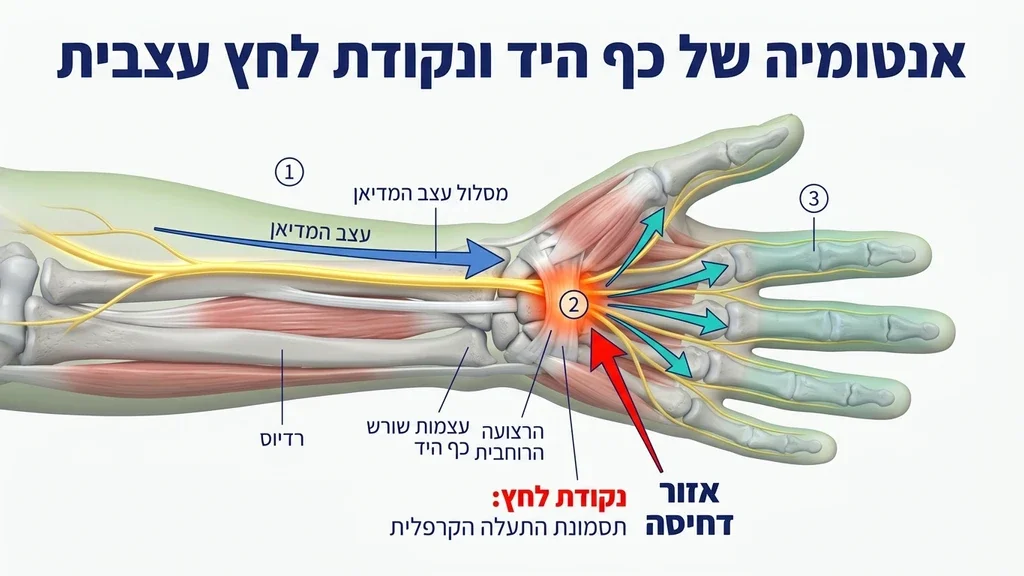
Carpal Tunnel Syndrome: Median Nerve Compression
Carpal tunnel syndrome occurs when the median nerve is compressed at the wrist. The carpal tunnel is a narrow anatomical passage formed by the wrist bones and a strong transverse ligament. Nine tendons and the median nerve pass through it. Swelling, tendon inflammation, or fluid buildup in the area can compress the nerve against the rigid ligament. This condition is particularly common among people who perform intensive computer-based office work, manual laborers, and pregnant women due to hormonal changes and fluid retention.
Typical Symptoms
- Location of symptoms: Numbness usually affects the thumb, index finger, middle finger, and half of the ring finger.
- Significant worsening at night: Many patients report severe pain and numbness in the hand that wake them at night and require them to shake the hand to relieve the pressure.
- Motor weakness: Difficulty gripping small objects or opening jars, and a tendency to drop objects unintentionally.
Early diagnosis and professional treatment of carpal tunnel syndrome prevent irreversible damage to the muscles at the base of the thumb, which are essential for pinching movements.
Cubital Tunnel Syndrome: Ulnar Nerve Compression
Unlike compression at the wrist, cubital tunnel syndrome involves the ulnar nerve, which passes through a narrow tunnel on the inside of the elbow. This nerve is primarily responsible for sensation in the smaller fingers and for activating small muscles within the hand that are important for fine motor skills. Nerve compression commonly results from prolonged pressure on the elbows at a desk or prolonged elbow bending during sleep, driving, or frequent cell phone use.
Key Warning Signs That Require Attention
- Distribution of sensory symptoms: Numbness specifically affecting the ring and little fingers.
- Localized and radiating pain: Pain, tenderness, or a burning sensation on the inside of the elbow that may radiate down the forearm to the hand.
- Impaired coordination and motor function: Increasing difficulty performing fine tasks such as typing quickly, buttoning a shirt, or holding keys securely.
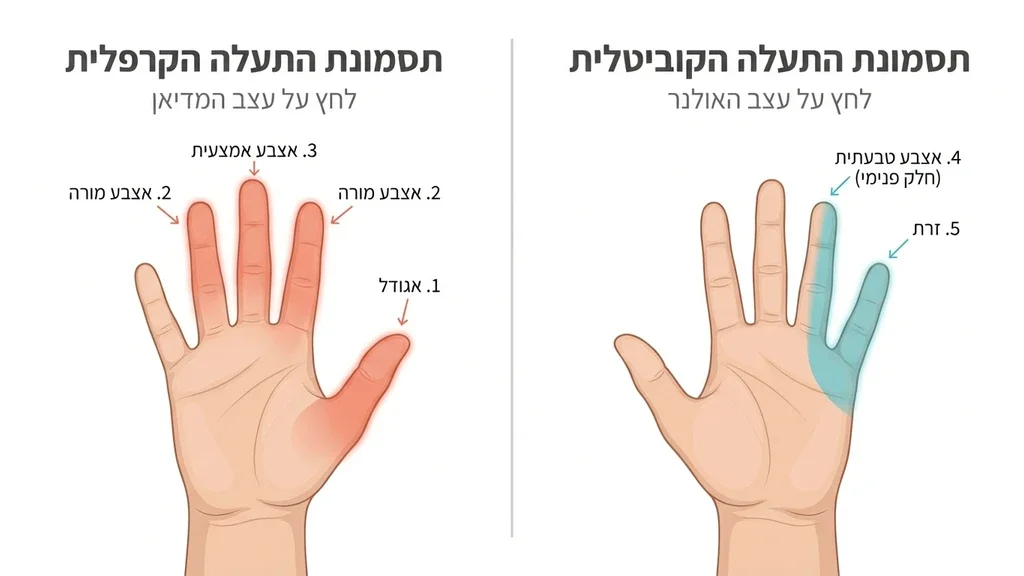
Clinical Comparison: How Can You Tell the Difference?
To help explain the key differences between the two syndromes, we have summarized their main features in a comparison table. This distinction helps a specialist neurosurgeon determine the precise source of nerve entrapment in the hand or arm and plan further evaluation.
| Clinical Feature | Carpal Tunnel Syndrome | Cubital Tunnel Syndrome |
|---|---|---|
| Location of compression | Inside of the wrist | Inside of the elbow |
| Fingers affected by numbness | Thumb, index finger, middle finger, and half of the ring finger | Little finger and half of the ring finger only |
| Common triggers for worsening pain | Strenuous wrist activity, typing, and sleep | Prolonged elbow bending during sleep and leaning on the elbow |
| Nerve involved | Median nerve | Ulnar nerve |
Diagnosis: The Importance of Peripheral Nerve Expertise
Accurate diagnosis of complex nerve injuries requires specialized expertise and extensive clinical experience. Peripheral nerve surgery is a distinct subspecialty that is rare in Israel. It includes treatment of complex injuries such as brachial plexus injuries in adults and infants, including obstetric brachial plexus injury (OBPI). When a patient reports frequent finger numbness, the first step is a comprehensive neurological examination.
The clinical examination includes a careful assessment of sensation in different areas of the hand, strength testing of specific muscles supplied by the nerves in question, and reflex testing. The physician will also perform special provocative tests designed to reproduce the symptoms during the examination. To confirm the diagnosis and determine the severity of the injury, the patient will be referred for additional diagnostic tests.
Common Diagnostic Tests
- Electromyography and nerve conduction studies (EMG and NCS): Electrophysiological testing measures the speed and strength of electrical activity along the nerves and identifies the precise location of the blockage.
- High-resolution ultrasound: An advanced imaging technique that allows direct visualization of the nerve and can identify nerve thickening, local inflammation, or mechanical pressure from nearby structures.
Treatment Approaches and Advanced Surgical Options
Treatment for nerve entrapment in the hand or arm is tailored to each patient based on symptom severity, duration, and diagnostic test results. In the early, mild stages, treatment is usually conservative. It may include special splints to immobilize the joint, physical and occupational therapy, comprehensive ergonomic workplace adjustments, and sometimes anti-inflammatory medication.
However, surgery may be needed when conservative treatment does not provide sufficient relief or when there is clear evidence of significant motor impairment and muscle wasting. Peripheral nerve release procedures are delicate microsurgical operations that require exceptional precision and a thorough understanding of anatomy. Dedicated international training in peripheral nerve surgery, such as a comprehensive clinical fellowship in the Netherlands, ensures complete and safe release of the compressed nerve while carefully protecting surrounding blood vessels and tissues. This specialized approach leads to significant pain relief, faster recovery, and an optimal, timely return to full daily function.

FAQ
Can carpal tunnel syndrome be cured without surgery?
In the early stages, symptoms can often be relieved with conservative treatment, including a night splint, physical therapy, and avoiding activities that aggravate symptoms. However, if nerve compression is prolonged and muscle damage is present, surgery is usually recommended to prevent permanent damage.
How long does it take for finger numbness to resolve after nerve release surgery?
Pain that wakes patients at night often improves immediately after surgery. However, full nerve recovery and complete resolution of numbness may take several weeks to months, depending on the severity of the initial injury.
Can prolonged computer mouse use cause cubital tunnel syndrome?
Mouse use is more commonly associated with pressure on the wrist and carpal tunnel syndrome. Cubital tunnel syndrome is usually caused by prolonged pressure on the elbow from a desk or hard chair armrests while working at a computer.
Why consult a neurosurgeon specializing in peripheral nerves?
Peripheral nerve surgery is a specialized field requiring microsurgical precision and a thorough understanding of anatomy. A specialist can accurately identify the site of compression and offer delicate, safe surgical treatment that minimizes the risk of injury to surrounding tissues.