

What Is a Nerve Laceration or Tear?
A sharp injury to a peripheral nerve—caused by a cut, stab wound, workplace injury, or accident—can partially or completely sever nerve fibers, impairing sensation, movement, or both in the area supplied by the nerve.
The Sunderland classification divides nerve injuries into five grades of severity, based on the anatomical structures damaged within the nerve. These range from a mild injury that resolves on its own (grade I) to complete severance of the nerve requiring surgery (grade V). The distinction between grades is critical to determining treatment: mild injuries require monitoring alone, while severe injuries require surgery to repair or reconstruct the nerve.
Treatment Options
Primary Suturing (Anastomosis)
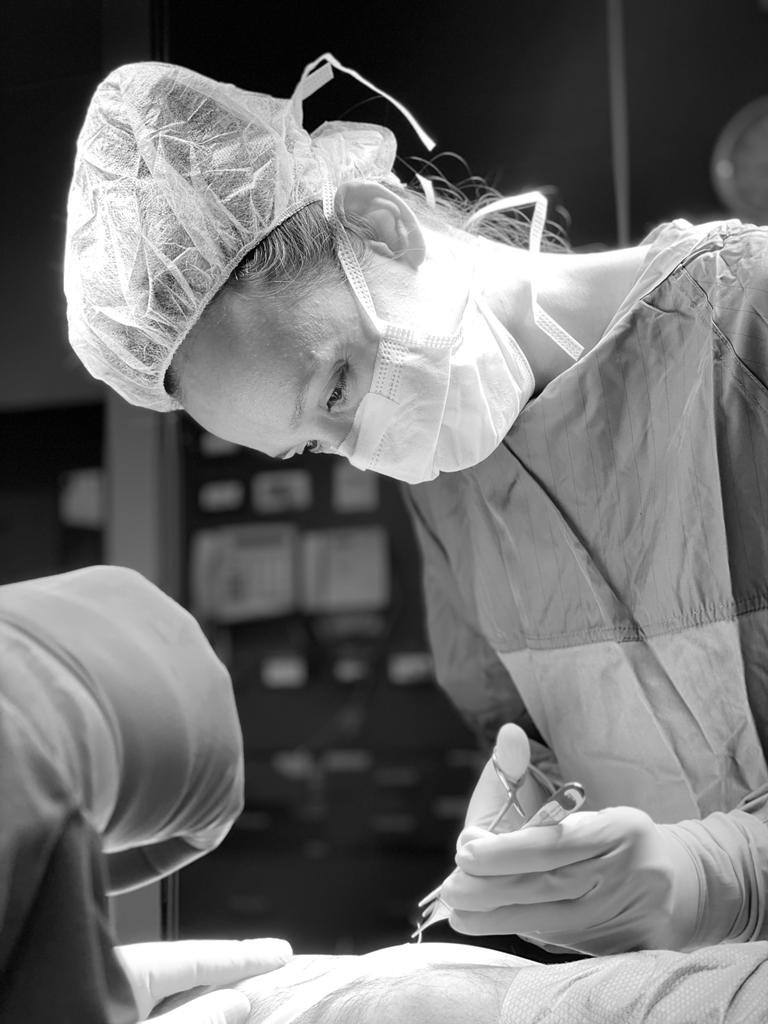
When the ends of the torn nerve are close enough to be joined without tension, they are sutured directly using microsurgical techniques under an operating microscope.
Nerve Grafting
When the gap between the nerve ends cannot be bridged directly, a donor nerve graft is used to bridge the gap and allow nerve fibers to regrow. The graft is usually taken from the sural nerve in the leg, whose loss causes minimal functional impairment.
Nerve Transfer (Neurotization)
For injuries close to the nerve’s origin, or when too much time has passed since the injury, a healthy donor nerve closer to the target muscle can be connected directly to the injured nerve. This shortens the distance over which the nerve must regrow and improves the chances of functional recovery.
The Importance of Prompt Treatment
The likelihood of functional recovery after a peripheral nerve injury decreases as more time passes between the injury and repair. After the nerve is severed, the muscle that has lost its nerve supply begins to gradually atrophy. The motor endplates—the points where the nerve connects to the muscle—also deteriorate and lose their ability to receive nerve signals again. This means that even a successful surgical repair may not result in full functional recovery if performed too late. Prompt diagnosis and treatment are therefore critical.
Microsurgery and Intraoperative Nerve Monitoring
Peripheral nerve repair is performed under an operating microscope, allowing precision at the level of individual nerve fibers. In complex surgeries, intraoperative nerve monitoring is also used to assess nerve function and identify the boundaries of the injured area in real time, improving surgical precision and the likelihood of an optimal functional outcome.